Morocco renews resolve to carry on full cooperation for settlement of Sahara issue
Morocco, which has accepted the UN framework agreement as a basis for negotiation, is resolved to continue to fully cooperate with the United Nations secretary general, his special envoy and the Security council to reach a fair, peaceful and lasting settlement to the Sahara issue.
The Moroccan resolve was renewed on Monday by Moroccan minister of foreign affairs and cooperation, Mohamed Benaissa, before the UN General Assembly.
The Moroccan official also invited other parties to positively respond to the appeal made in the security council resolution 1359 to start negotiations for a political solution to the artificial conflict.
The minister joined the secretary general in calling the framework agreement initiative by the secretary general and his personal envoy as the real last chance for a final and rapid settlement of the Sahara issue.
Benaissa also noted that Spanish continued occupation of the two Moroccan cities of Sebta and Melilia and neighboring islands is an anachronism that contradicts universal values and principles defended by the international community. He went on that Morocco, which is attached to the construction of the Euro-Mediterranean edifice and to dialogue between the two Mediterranean shores, considers the establishment of irreversible cooperation, friendship and neighborliness relations with Spain as a strategic fundamental objective.
He called Spain to be more understanding and respectful of Morocco's legitimate sovereign rights over the two cities and neighboring islands by setting forth means to ensure the Moroccan sovereignty over the territory while guaranteeing the Spanish residents' economic, social and cultural rights.
Talking about last September 11 terror attacks against Washington and New York, he recalled Morocco's firm and absolute condemnation of these inhumane acts and urged all states to spare no effort to root out the roots of terrorism which does not only threaten international peace and security, but also all of human kind.
Morocco deems that the United Nations has an essential role in addressing deep reasons that allow terrorism to thrive and the security council resolutions constitute the appropriate frame in organizing any joint action spearheaded by the United Nations.
Regarding the Middle East issue, the head of the Moroccan diplomacy insisted Morocco has been asking for the lifting of the blockade enforced against Palestinian cities and villages, the end of houses and harvest demolitions and the end of the settlements policy in all Palestinian territories occupied since 1967. He also renewed Morocco's request for an end to the violence and counter-violence cycle and the return to negotiations on the basis of the Michell report and previous Palestinian-Israeli agreements.
Benaissa noted with great interest and great satisfaction recent remarks by US president George W. Bush on the creation of a Palestinian state.
Touching on Iraq, Benaissa expressed hope that ongoing contacts between the world body and the Iraqi government will lead to sanctions lifting and to the end of despair and sufferings of the Iraqi people. Morocco reaffirms the need to preserve the independence and sovereignty of both Iraq and Kuwait, he insisted.
In his address, the Moroccan delegate said it is crucial for Africa that armed conflicts be settled and called the United Nations to develop a new and pragmatic approach to maintain and consolidate peace and favor preventive action.
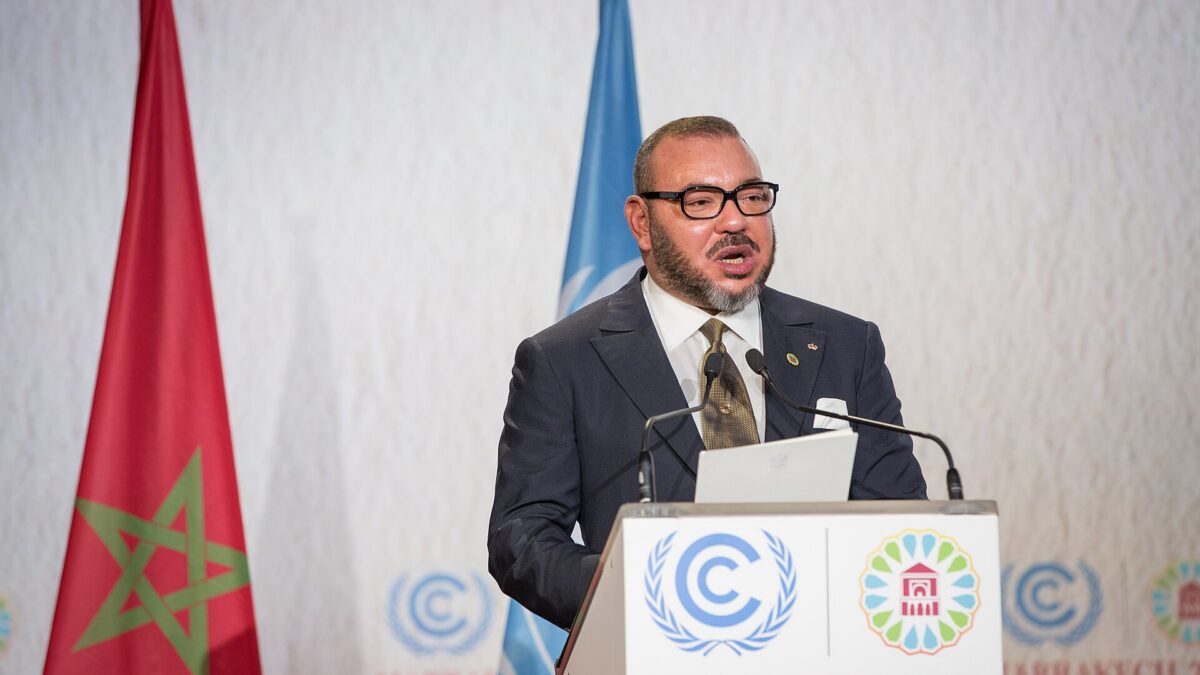
Morocco deems that international peace and security depends also on environment protection, said Benaissa who recalled that Morocco had the great honor and responsibility to host and contribute to the success of the 7th conference of parties to the UN framework convention on climatic change, which constitute a stage in the international conference on lasting development slated in Johannesburg next year.
Benaissa underscored Morocco's constant will to speed up the construction of the Arab Maghreb Union (UMA) and faith in the usefulness of a strong and balanced Maghreban regional grouping.
Dealing with social issues, he said the world body needs to make more efforts for childhood causes and expressed the Kingdom's resolve to efficiently contribute to the success of the general assembly extraordinary session on children with the collaboration of Ngo's.
Noting that the evolution of the world economy requires that Mediterranean countries give a new impetus to their economic relations on new bases and a new approach, he recalled Morocco's sponsored initiatives, including the initiative of King Mohammed VI, known as the "Agadir Declaration" for the extension of the free trade area concluded between Morocco, Egypt, Jordan and Tunisia to other Mediterranean countries to fulfill integration and partnership advocated by the Barcelona process.