Gaza’s 68 million tons of rubble threaten disaster, Anadolu reports
A Palestinian authority's warning points to destruction of farmland and water systems, while an earlier UN assessment details contamination risks.
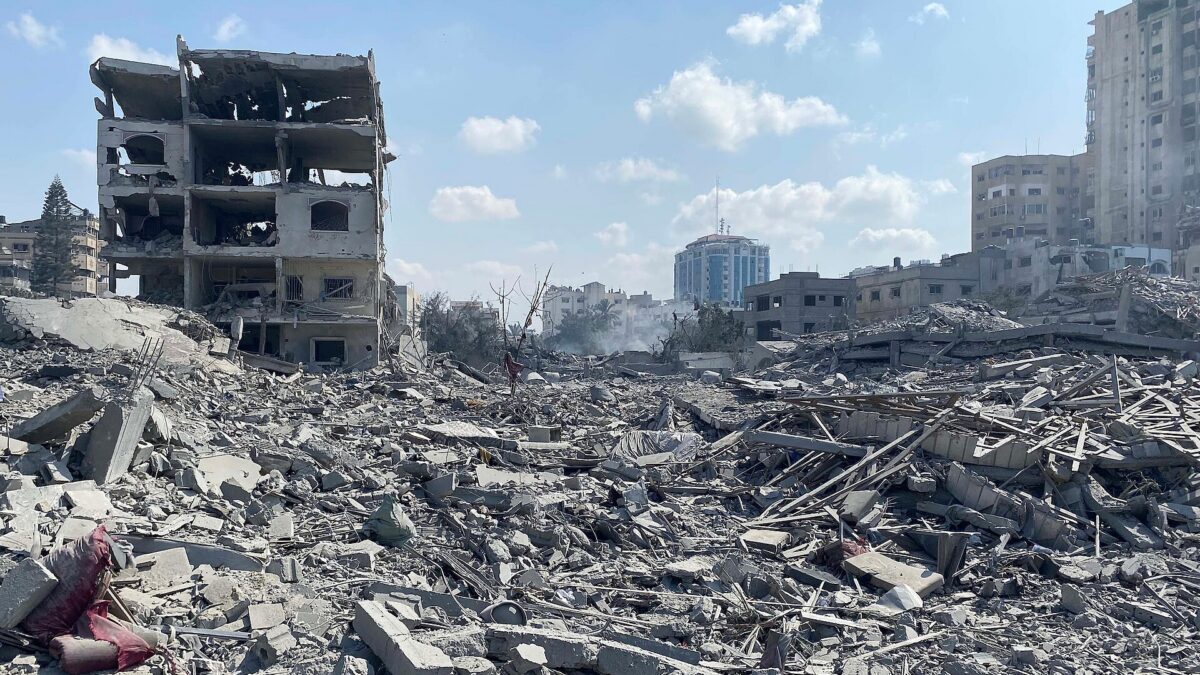
A Palestinian authority has warned that 68 million tons of rubble in the Gaza Strip pose an environmental and humanitarian disaster, Anadolu Agency reported on November 6. The warning concerns debris across a territory where water systems and agricultural land have suffered extensive destruction.
Anadolu cited the Palestinian Environment Quality Authority as saying destruction had affected 82% of agricultural land and 84% of infrastructure serving water supplies and sewage disposal.
An earlier assessment by the United Nations Environment Programme, released on September 23, 2025, put the debris total at 61 million tonnes. The figures cannot be directly compared: the Anadolu report did not specify an assessment date or methodology, and it was unclear whether both estimates used the same units and definitions.
UNEP estimated that damage or destruction had affected 78% of roughly 250,000 buildings in Gaza. It said the conflict had harmed soils, freshwater resources and the coast, with some environmental recovery potentially requiring decades.
Removing the rubble also carries contamination risks. UNEP estimated that about 15% could face a relatively high risk of contamination from asbestos, industrial waste or heavy metals unless different waste materials were separated effectively early in the clearance process.
The agency described freshwater as scarce and much of what remained as polluted. It said damaged sanitation systems had probably worsened aquifer contamination. Pollution along the coast and in marine waters was also considered likely, but testing was not possible.
Its findings also documented extensive losses to agriculture and vegetation since 2023: 97% of tree crops, 95% of shrubland and 82% of annual crops. UNEP said large-scale food production was no longer possible.
Vegetation loss and soil compressed by military activity had also made the ground less able to absorb water, according to UNEP. That increased runoff and the danger of flooding while reducing the replenishment of groundwater.
The State of Palestine requested the assessment. Security restrictions prevented UNEP personnel from entering Gaza, so the agency relied on satellite analysis, remote sensing and observations gathered on the ground by other UN agencies.
The assessment set out 30 recommendations, including rebuilding water and sewage systems, testing soil for contamination, clearing and recycling debris where feasible, and disposing of munitions safely.
Sources
- Anadolu Agency — news agency: 68M tons of rubble pose environmental, humanitarian disaster in Gaza: Palestinian authority · accessed 2026-11-06
- unep.org — media: Environmental damage in Gaza Strip harming human health, threatening long-term food and water security - new UNEP report | UNEP - UN Environment Programme · accessed 2026-11-06
Spotted an error? Tell us — see our corrections policy.