Forum on Syrian-Russian Relations
What has happened since
Assad fled to Russia in December 2024
Bashar al-Assad fled to Russia on December 8, 2024, according to the US Congressional Research Service (CRS). In an interview that December, Ahmed al-Sharaa called for a different strategic relationship with Moscow based on respect for Syria's sovereignty.[1]
Syria's new leadership sought Assad's return
A conference bringing together armed groups that had opposed Assad named Ahmed Hussein al-Sharaa interim president in January 2025, CRS reported. In April, al-Sharaa confirmed that he had asked Russia to return Assad, who had been granted asylum there.[1]
High-level visits continued
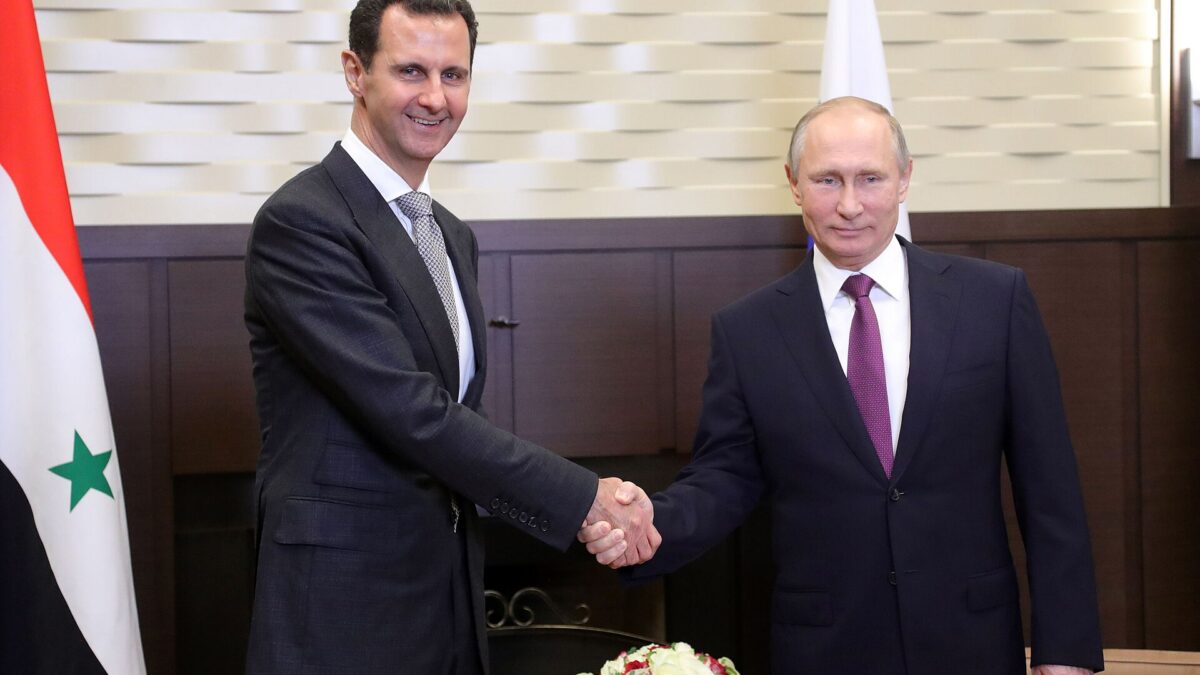
Syria's foreign minister travelled to Moscow in July 2025. Al-Sharaa subsequently met Russian President Vladimir Putin there in October 2025 and January 2026, according to CRS.[1]
Russian forces remained at two sites in February 2026
In its February 26, 2026 report, CRS said Russian personnel and equipment remained at Hmeimim and Tartous. It also reported al-Sharaa's pledge to respect earlier bilateral agreements, potentially covering the 49-year military-access leases that Assad's government signed in 2017.[1][2]
An August memorandum set out new arrangements
On August 9, 2026, Syria's state news agency SANA reported that Damascus and Moscow had agreed on a memorandum to reorganise Russia's presence along Syria's coast. Citing Syria's Foreign Ministry, it said the agreement followed roughly 18 months of negotiations led by the ministry.[2]
Syria was to manage civilian facilities
Under the memorandum, Syria would take over management of civilian facilities, including Hmeimim Airport and Tartous Port's fourth commercial berth, SANA reported. These facilities were to be brought gradually under civilian administration.[2]
Military facilities were designated for joint training
The ministry announcement said military facilities would be converted into centres for joint training and qualification under new bilateral arrangements. The memorandum set a maximum three-month transition period before the arrangements would take effect, according to SANA.[2]
Completion was not confirmed in October 2026
The European Union Agency for Asylum's October 2026 report still described the civilian transfers and military-facility conversions as measures envisaged by the August agreement. It did not confirm that the changes had been completed.[3]
Why it still matters
Russia was Assad's most important military supporter, according to CRS. The relationship inherited by al-Sharaa included long-term access agreements for Hmeimim and Tartous, making the future of those facilities a central part of dealings between Damascus and Moscow.[1][2]
Timeline
- 2024-12-08 Assad fled to Russia, according to CRS.[1]
- 2025-01 A conference of anti-Assad armed groups appointed al-Sharaa interim president, CRS reported.[1]
- 2025-04 Al-Sharaa confirmed that he had asked Russia to return Assad, according to CRS.[1]
- 2025-10 Al-Sharaa met Putin in Moscow, according to CRS.[1]
- 2026-01 Al-Sharaa held another meeting with Putin in Moscow, CRS reported.[1]
- 2026-02-26 CRS reported that Russia retained troops and equipment at Hmeimim and Tartous.[1][2]
- 2026-08-09 SANA reported a memorandum providing for Syrian management of civilian facilities and conversion of military sites into joint training centres, with a transition lasting no more than three months.[2]
- 2026-10 The EUAA described the facility changes as provisions of the August agreement, without confirming completion.[3]
Sources
- Syria: Transition and U.S. Policy — Congressional Research Service, hosted by EveryCRSReport.com, 2026-02-26
- Syria, Russia agree to reorganize Russian military presence under new memorandum — Syrian Arab News Agency (SANA), Syria's state news agency, 2026-08-09
- 2026_10_EUAA_COI_Query_Response_Q29_Syria_Major_human_rights_security_and_socio-economic_developments — European Union Agency for Asylum
The original report
ArabicNews.com, January 21, 2005
The Academy of Diplomacy of the Russian Foreign Ministry, in cooperation with the Syrian embassy and community in Russia, on Thursday held a forum on "The Syrian-Russin Relations: Traditions and Prospects."
Participating in the forum were Advisor of the Russian President Islam Bek Aslakhanov, Deputy Speaker of the Duma Sergie Paporin, Syrian ambassador in Moscow Wahib al-Fadel, several state and parliamentarian figures as well as ambassadors of Arab and Muslem countries in Moscow and a great number of Syrians in Russia.
Director of the Academy Yuri Vogin expressed confidence that the upcoming visit of President Bashar al-Assad to Moscow would further enhance cooperation between Syria and Russia.
Vogin added that the talks which will be held between President Assad and Russian President Putin would help strengthen the existing relations between the two countries "despite the propaganda campaigns which aim at preventing Syria and Russia from improving their relations."
Paporin, who is also leader of the National Russian Renaissance Party, stressed that Syrian-Russian relations are firm and strong, expressing the hope that President al-Assad's visit to Russia would bring the two countries' relations to a new turning point up to the level of strategic partnership for the interest of the two peoples.
For his party, Syrian ambassador in Moscow Wahib Fadel said "We hope that the visit would yield great positive results on the level of the bilateral relations and constitutes an important turning point to enhance the process of cooperation and friendship between the two countries and a momentum to these relations."