On the new Syrian government
What has happened since
A later assessment of Syria’s reconstruction needs
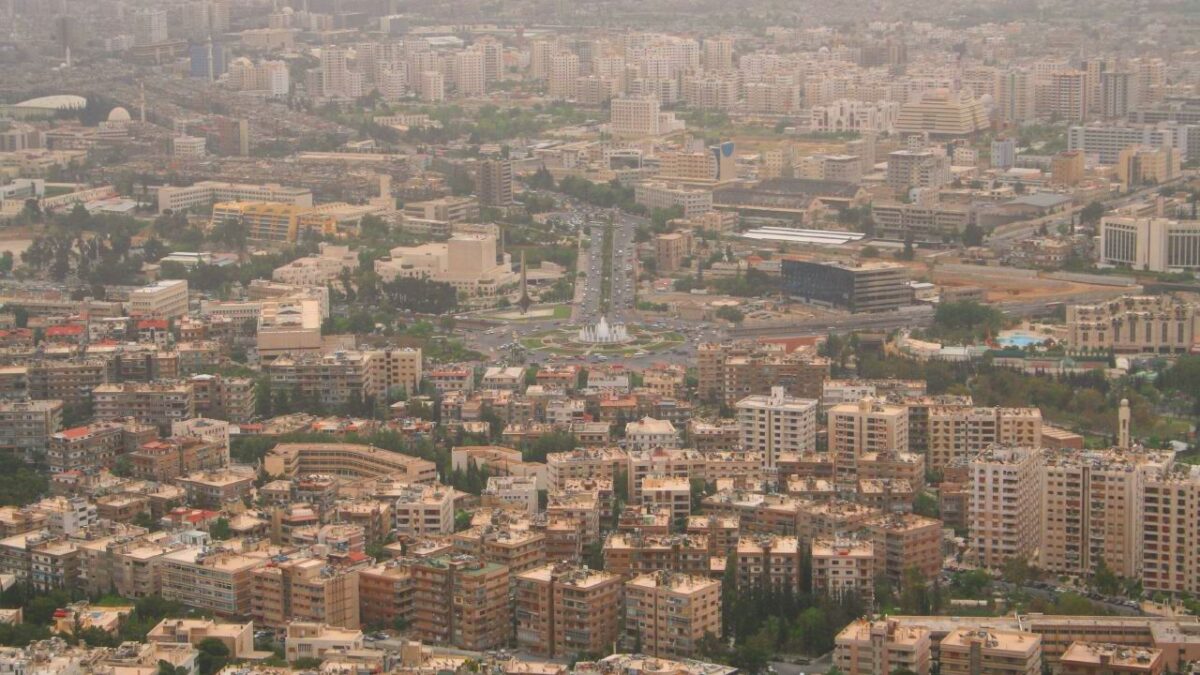
On 21 October 2025, the World Bank published an assessment of reconstruction costs for Syria’s conflict-damaged physical assets. The assessment covered damage to infrastructure and buildings between 2011 and 2024, a period after this article’s original publication in December 2001. It provides a later account of the country’s physical reconstruction needs, rather than an assessment of the government or ministerial appointments discussed in the historical report.[1]
Reconstruction costs estimated at $216 billion
The World Bank estimated reconstruction costs at $216 billion, within a range of $140 billion to $345 billion. That range is important context for the central estimate: the bank did not present a single, fixed reconstruction price. The estimate concerns the conflict-damaged physical assets covered by its assessment, specifically infrastructure and buildings damaged during the 2011–2024 period.[1]
Direct physical damage measured separately
In a separate measure, the World Bank estimated direct physical damage at $108 billion. Infrastructure accounted for $52 billion, residential buildings for $33 billion and non-residential buildings for $23 billion. Infrastructure was therefore the largest of the three damage categories. These figures describe the bank’s direct-damage assessment; they are distinct from the higher estimate of what reconstruction would cost.[1]
Why it still matters
The distinction between damage and reconstruction costs is essential when reading these figures. The $108 billion damage estimate and the $216 billion reconstruction estimate measure different things, not competing estimates of the same total. Together, they provide a documented reference for understanding the scale and composition of Syria’s physical reconstruction needs.[1]
Sources
- Syria’s Post-Conflict Reconstruction Costs Estimated at $216 billion — World Bank, 2025-10-21
The original report
ArabicNews.com, December 11, 2001
By the resignation of the current Syrian government, which was formed under the late Syrian President Hafez al-Assad, it has served for one and a half years. The resigned government came to fight corruption and correct administrative performance and work for economic openness as well as to take the Syrian economy out of the state of recession it has been suffering through accelerating reforms that previous Syrian governments were hesitant to make.
However, great criticism has been addressed to the current government of being slow and not executing laws or even not implementing the agreements signed between Syria and the Arab states.
It is expected that the defense ministry will stay in the hands of Lt. Gen. Mustafa Tlass who has been assuming this post since 1970 and Farouk al-Shara to stay a foreign minister, the post which he has been occupying since 1983.
The current Syrian government was supposed to resign after President al-Assad assumed power in Syria in July 2000, just one month after the death of his father the late President Bashar al-Assad who ruled Syria for 3 decades.
The Syrian constitution states the resignation of the government when the President is changed but authorizes the new President to keep it.
According to sources asked not to be identified the resignation of the Syrian government came because of its inability to revive the economy so as to be able to attract private investments and promote the growth. The sources said " the resigned government used to work at different speeds " in remarks to the fact that some ministers stayed in their posts for more than 15 years including the finance minister Khaled al-Maheyni and the minister of the economy Muhammad al-Imadi.
Worthy mentioning that Miro was born in 1941 in the al-Tel in the outskirts of Damascus. Before he was a prime minister he was appointed successively as the governor of Dara ( south Syria), Hassaka ( east), Aleppo (north). Miro got a doctorate in the Arab literature and humanitarian sciences and became a leading figure in the Baath part in June 2000.