Louvre Abu Dhabi exhibition puts heritage conservation work on display
From Beirut’s shattered glass to manuscripts from Mali, Living Legacies examines the people and techniques behind cultural preservation.
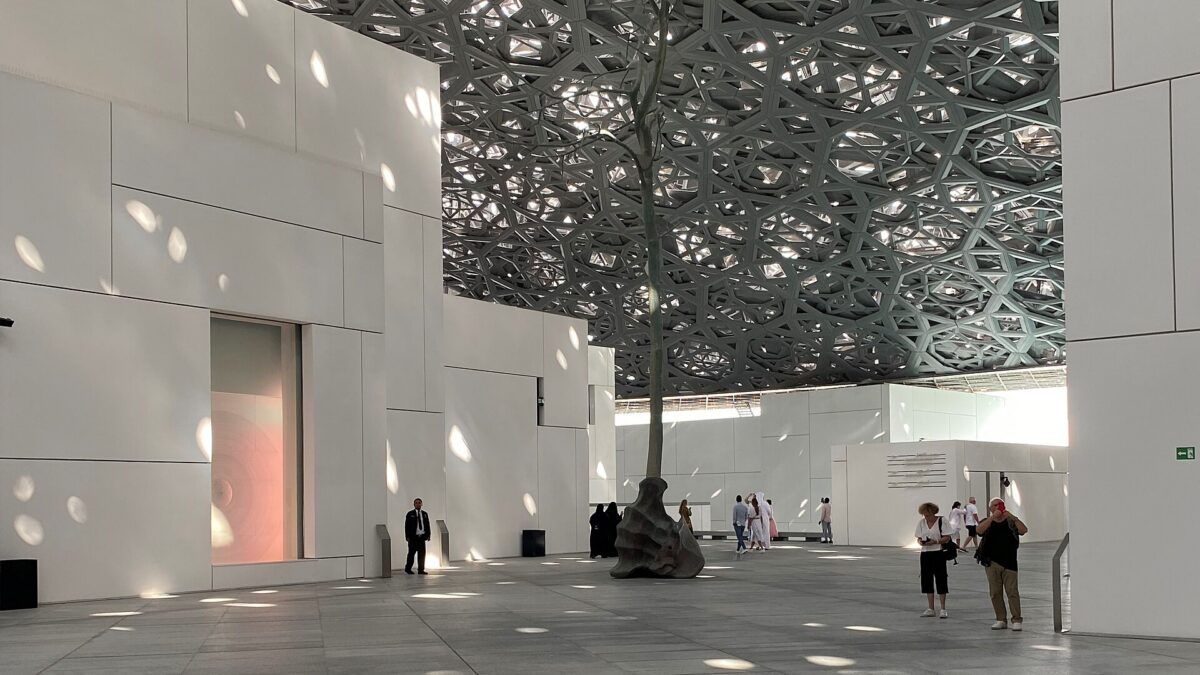
Louvre Abu Dhabi is putting the work of heritage conservation before visitors in Living Legacies: Protecting Heritage, Building Hope, an exhibition marking the International Alliance for the Protection of Heritage’s 10th anniversary. Organised with the alliance, known as ALIPH, it examines how people protect and repair cultural objects, according to The National and the museum’s season announcement.
The exhibition runs until April 25, 2027, according to the season announcement published by the Abu Dhabi Media Office. Its opening date differs between accounts: the announcement lists November 23, 2026, while The National gives November 25.
The National reports that roughly 50 works representing eight countries are arranged in seven sections. Ancient objects, manuscripts, ceremonial clothing and contemporary art are brought together, with institutional loans, projections and personal testimony helping explain the work behind their preservation.
Among the exhibits is ancient glass belonging to the Archaeological Museum of the American University of Beirut, whose collection suffered damage in the August 4, 2020, port explosion, The National reports. Unbroken vessels appear alongside repaired examples and fragments, showing what conservators can recover and what remains beyond repair.
That display follows years of conservation work on the Beirut collection. In a press release, the British Museum described a partnership with the university museum that started in 2021 and treated eight damaged vessels in London.
Other work took place at Louvre Abu Dhabi itself. According to The National, Maria Luisa Russo, founder of the Italian organisation Amalia, worked on manuscripts from Djenne in Mali in the museum’s laboratories shortly before the exhibition opened.
A section on Mosul in Iraq examines destruction between 2014 and 2017 and later restoration by Iraqi authorities working with international partners, including Unesco and ALIPH, the newspaper reports.
Beneath the museum’s dome, visitors can use their phones to view a full-scale digital reconstruction of Lamassu sculptures destroyed at Mosul’s museum in 2015. The National reports that Snap and ALIPH built the augmented reality experience using scans of fragments that survived.
The digital work also reflects gaps in researchers’ knowledge. Although pigment traces indicate the sculptures were painted, the reconstruction includes only selected touches of colour because the original application of the paint cannot be established, according to The National.
Sources
- The National — media: Louvre Abu Dhabi exhibition reveals human effort behind saving cultural heritage · accessed 2026-11-25
- mediaoffice.abudhabi — media: Louvre Abu Dhabi announces calendar of events and exhibitions for 2026-2027 season · accessed 2026-11-25
- visitabudhabi.ae — media: Living Legacies | Experience Abu Dhabi · accessed 2026-11-25
- britishmuseum.org — media: Press release · accessed 2026-11-25
Spotted an error? Tell us — see our corrections policy.