Morocco ready to contribute to consensual, realistic and final settlement of Sahara issue
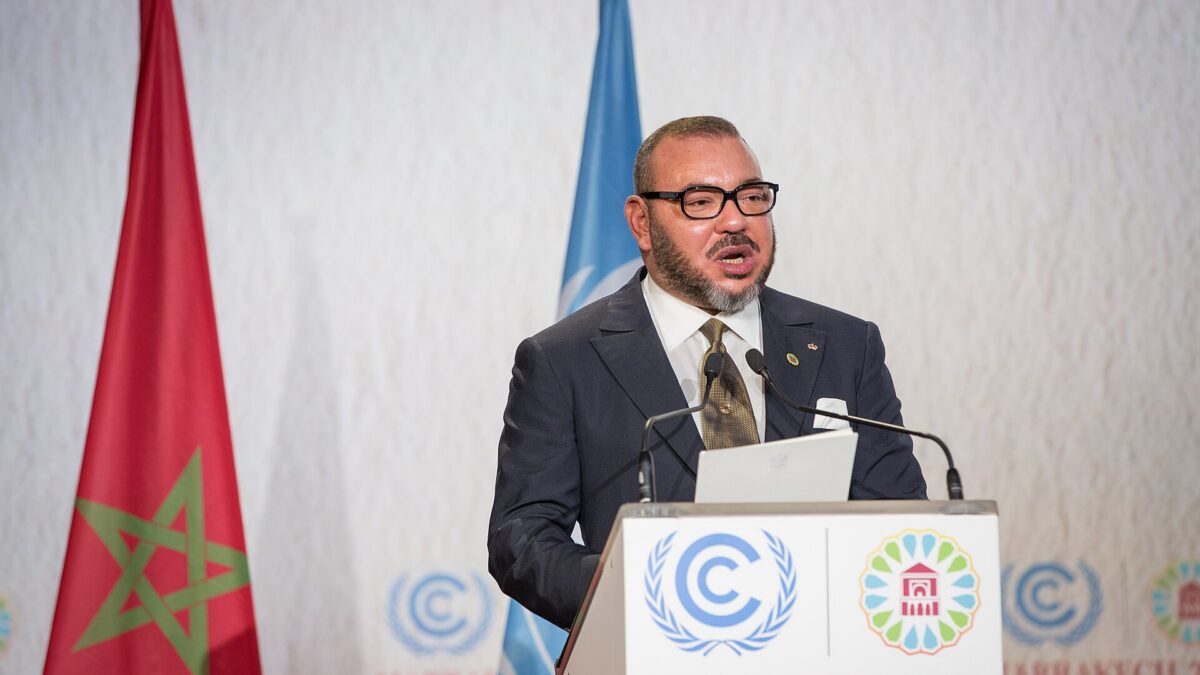
Morocco stands ready to "contribute effectively to efforts being made to find a consensual, realistic and final political solution (to the Sahara issue) which accommodates its legitimate right to protect its sovereignty, national unity and territorial integrity," said, in Meknes Thursday, King Mohammed VI.
In a nationwide speech, broadcast live on the Moroccan radio and TV stations on the occasion of the 28th anniversary of the Green March, the monarch said that Morocco's steadfast stance on the Sahara issue "derives its strength from the national consensus over this issue and from the fact that its cause is a just one." The sovereign who insisted on a solution which accommodates Morocco's legitimate right to protect its sovereignty, national unity and territorial integrity and complies with democratic principles and policies made it clear that "any initiatives which run counter to these basic requisites for a political solution will only strengthen the nation's resolve" and risks to precipitate the whole region into a quagmire of instability and distract it from the fight against terrorism and extremism which threaten the whole Mediterranean region. Morocco, went on the sovereign, as a democratic state has always been committed to the settlement of disputes by peaceful means, as a matter of principle, recalling how it "has cooperated fully with the United Nations, subscribing to Security Council, especially those adopted since 2002. These resolutions, which all stress the need for a political settlement, known as the third solution, were adopted when the international community reached the conclusion that the 1991 settlement plan was inapplicable."
After stressing the Kingdom's continued commitment for the peaceful settlement of the Sahara-related dispute within the framework of the current United Nations process and pledging every effort to contribute to its success, the king underscored that "our quest for peace and our commitment to a negotiated solution should not be perceived as a sort of weakness." "Today, more than ever before, we are determined to defend the legitimacy of our national sovereignty and territorial integrity, as well as the dignity of the Moroccan people and our single -yet exceptionally rich and varied- identity," the king vowed. He also voiced pride "at the unanimous rejection" of the misinterpretation made of Security Council Resolution 1495 adopted on July 31, 2003.
This unanimous rejection, said the king, "proves once again, if need be, that the Moroccan nation, from Oujda to Smara and from Tangier to Lagouira, is firmly united and tolerates no infringement of national sovereignty or territorial integrity." The same pride was expressed as to the high turnout of Moroccans from southern provinces in various elections held by Morocco as a confirmation of their strong commitment to their Moroccan nationality. "Each voting slip dropped freely and spontaneously into the ballot box was tantamount to a vote confirming their status as Moroccan citizens, thereby reaffirming the Beia (allegiance) which has always bound them to the glorious Alaouite throne, in an environment where security, serenity and stability prevail and where democracy is truly exercised."
In the same vein, the sovereign pointed out that colonization in the Sahara ended when Morocco and Spain negotiated and reached consensus and agreements, arguing "this is, in fact, a fabricated issue which is against the logic of Maghreb unity, at a time when only regional blocs and groupings, based on the principles on democracy and economic integration, have a say in world affairs." "The artificial issue over the Moroccan Sahara is by no means a matter of decolonization, since decolonization has already taken place through negotiation, consensus and agreements, between the parties concerned, mainly Morocco and Spain."
In this context, the sovereign renewed that "Morocco has always regarded the Arab Maghreb Union as an essential strategic option" and reiterated the kingdom's strong commitment to brotherly ties with Algeria. "Let us work together to solve the problems which thwart our peoples' ambition to build a strong Maghreb Union, based on mutual understanding, stability, concord, unity, progress and peace," the sovereign urged before welcoming all good offices in this respect and voicing appreciation for a number influential powers who understand Morocco's rights and are keenly interested in the stability of the Arab Maghreb and the Mediterranean region.