
Government reshuffle in Oman
What has happened since
Sultan Haitham succeeded Sultan Qaboos in 2020
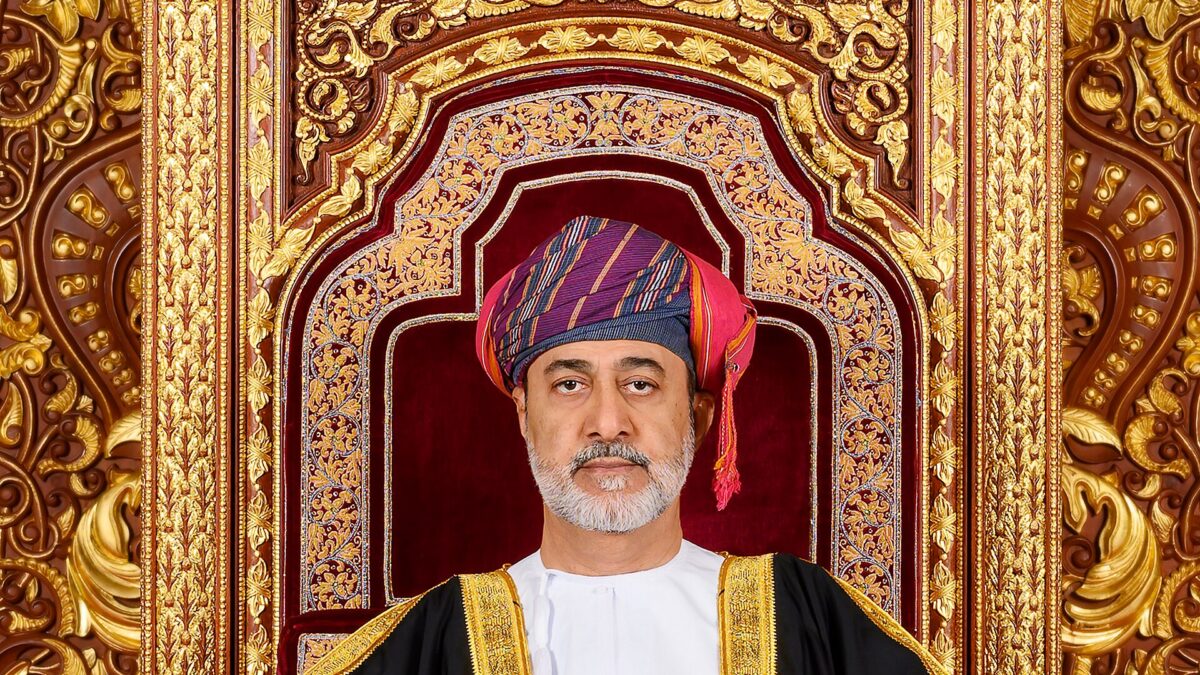
Sultan Haitham bin Tarik took the throne on January 11, 2020, after the death of Sultan Qaboos bin Said, according to Oman's Foreign Ministry. Later that year, a royal decree replaced the Ministry of Manpower created in the 2001 reshuffle.[3][4]
A new Ministry of Labour
Royal Decree 89/2020 established the Ministry of Labour on August 18, 2020. It abolished the Ministry of Manpower, the Ministry of Civil Service, the Civil Service Council, the National Training Fund and the National Centre for Employment, transferring their assets, rights and obligations to the new ministry. Employees of the two former ministries, the fund and the employment centre moved to the new ministry without changes to their financial grades.[4]
Social protection reform in 2023
Oman issued its Social Protection Law on July 19, 2023. The International Monetary Fund described the reform as bringing state-funded benefits together with social insurance and placing their administration under one institution.[5]
A new Labour Law
Oman also adopted a new Labour Law through Royal Decree 53/2023. Article 70 limits ordinary working time to eight actual hours per day and 40 per week. Article 73 allows specified exceptions for seasonal activities and sectors covered by ministerial decisions.[6]
Social Development mandates defined in 2026
Royal Decree 15/2026, dated January 12, 2026, set out the Ministry of Social Development's responsibilities and organisational structure. Its duties include preparing proposals for the Council of Ministers on family affairs, community development, and care and rehabilitation for persons with disabilities. It also assigns the ministry responsibility for protecting disability rights in coordination with public bodies, civil society and businesses.[7][9]
The January 2026 cabinet
A separate decree restructuring the Council of Ministers on January 12, 2026, listed Laila bint Ahmed bin Awad Al Najar as Minister of Social Development and Mahad bin Said bin Ali Baowain as Minister of Labour. The Foreign Ministry also recorded the appointment of Rashid bin Ahmed bin Rashid Al Shamsi as undersecretary responsible for family and community development affairs.[7][8]
Social-security reforms documented in June 2026
On June 3, 2026, the International Labour Organization published a report jointly with Oman's Social Protection Fund describing a system that combines universal benefits with contribution-based coverage. It identified a state-funded minimum level of social protection, a unified contributory pension scheme and broader protections for Omani and non-Omani workers. The report described integrated governance intended to support adequate benefits, financial sustainability, equity and alignment with international labour standards.[10]
Why it still matters
The 2001 reshuffle separated functions that had previously shared a ministry. The Ministry of Information dates the combined social-affairs and labour ministry to May 20, 1972, and the creation of the separate Ministry of Manpower to November 6, 2001. That ministry's responsibilities included workforce policy, enforcement of labour law and vocational-training legislation. The 2020 reorganisation subsequently brought manpower and civil-service administration into the Ministry of Labour.[1][2][4]
Timeline
- 2020-01-11 Sultan Haitham bin Tarik succeeded Sultan Qaboos bin Said, according to the Foreign Ministry.[3]
- 2020-08-18 Royal Decree 89/2020 created the Ministry of Labour and abolished the Ministry of Manpower and four other bodies.[4]
- 2023-07-19 Oman issued the Social Protection Law, combining reforms to state-funded benefits and social insurance.[5]
- 2026-01-12 Royal decrees defined the Ministry of Social Development's mandates and restructured the Council of Ministers.[7][8][9]
- 2026-06-03 The ILO and Oman's Social Protection Fund published a joint report on the country's social-security reforms.[10]
Sources
- Ministry of Social Development — Oman Ministry of Information
- Ministry of Manpower — Oman Ministry of Information
- Head of State — Oman Foreign Ministry
- Royal Decree 89/2020 Establishing the Ministry of Labour, Determining Its Competences, and Adopting Its Organisational Structure — Decree, 2020-08-18
- Oman: 2023 Article IV Consultation-Press Release; Staff Report; and Statement by the Executive Director for Oman — International Monetary Fund
- Royal Decree 53/2023 Issuing the Labour Law — Decree
- His Majesty issues 16 Royal Decrees — Oman Foreign Ministry
- Royal Decree No. 17/2026 restructuring the Council of Ministers — Oman Foreign Ministry, 2026-01-12
- Royal Decree 15/2026 Determining the Mandates of the Ministry of Social Development and Adopting Its Organisational Structure — Decree, 2026-01-12
- Unlocking the transformative potential of lifecycle social protection through an integrated and multi-tiered system — International Labour Organization, 2026-06-03
The original report
ArabicNews.com, November 9, 2001
Sultan Qabous Bin Saeed of Oman has issued a Sultanate decree providing for the division of the ministry of social affairs, labor and vocational training to two ministries. They are the ministry of social development which is in charge of social affairs and the Labor force ministry which is in charge of work specialization and vocational training.
A second Sultanate decree stated to appoint Amer al-Housni as a minister for social development. He is the former minister for the divided ministry, besides appointing Juma'a Ali Jum'a as a labor force minister in the new Cabinet of the Omani government.
Worthy mentioning that the new minister used to have the post of the deputy chairman of the higher council for " Bids." This is also the first time in which a special ministry is established for the labor force in Oman. This new ministry is founded after the increase in unemployment rate among the Omani youths. A matter which necessitated the personal interference of the Sultan to found financial backing funds for small projects established by youths as well as other forms of support. All these are also combined with the continued policy of replacing foreign labor force by national labor force in Oman.