
Why the Strait of Hormuz matters to global oil and gas trade
The waterway between Iran and Oman carries large volumes of oil and liquefied natural gas, with limited routes to bypass it.
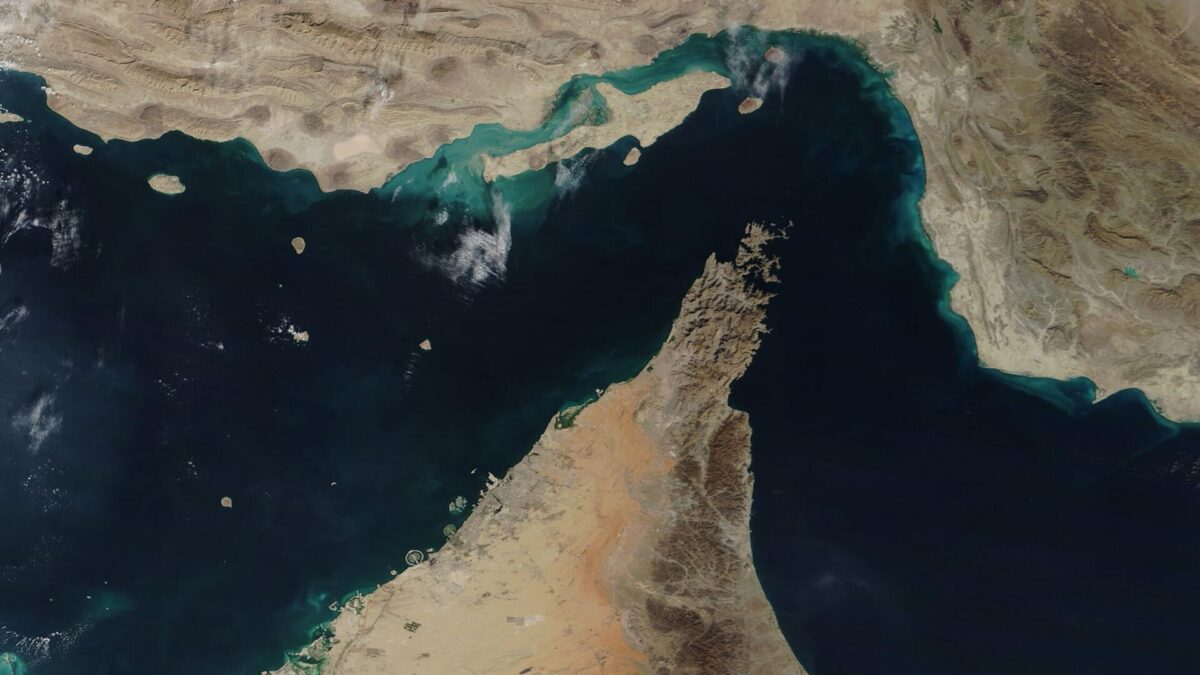
Where the strait lies
The Strait of Hormuz separates Iran from Oman and links the Persian Gulf to the Gulf of Oman and the Arabian Sea. Its depth and width allow even the largest crude tankers to pass, making it a route for large-scale energy exports, according to the US Energy Information Administration (EIA).
How much energy passes through
During January–June 2025, oil shipments through Hormuz averaged 20.9 million barrels daily, EIA estimates. That was equivalent to roughly 20% of worldwide petroleum liquids consumption. Measured against oil traded by sea, rather than consumption, the share was one-quarter.
The route also carried 11.4 billion cubic feet of liquefied natural gas (LNG) a day in that period, exceeding one-fifth of global LNG trade. Most came from Qatar. These figures describe the first half of 2025, not a live measure of shipping activity.
Who depends on the route
Asian buyers received an estimated 89% of the crude and condensate shipped through Hormuz in the same period. China, India, Japan and South Korea together took 74%. China was also the largest destination for LNG using the strait; almost one-third of LNG headed to China travelled through it, according to EIA.
Direct US dependence was smaller. Imports of Persian Gulf crude and condensate through Hormuz averaged about 400,000 barrels daily, equivalent to 7% of US crude and condensate imports and 2% of US petroleum liquids consumption.
Why pipelines cannot replace it
EIA says alternative routes could accommodate only part of the oil normally passing through Hormuz. It estimates that Saudi Aramco's East-West pipeline and the United Arab Emirates' Abu Dhabi pipeline could together offer about 4.7 million barrels a day of bypass capacity during a disruption.
Iran opened its Goreh-Jask pipeline and Jask export terminal in 2021, with an initial export cargo, followed by a few small loadings in late 2024. EIA estimates effective pipeline capacity at around 300,000 barrels daily. It also reports a UAE plan for a Jebel Dhanna–Fujairah bypass carrying 1.5 million barrels daily by 2027; that is planned capacity, not completed infrastructure.
What international law says
Part III of the United Nations Convention on the Law of the Sea sets rules for international straits. For those covered by its transit-passage provisions, ships and aircraft may make an uninterrupted journey between seas or exclusive economic zones. Bordering states retain sovereignty or jurisdiction, subject to those rules and other international law.
The Convention prohibits suspending transit passage. Ships and aircraft must travel without delay and avoid threats or force against bordering states; ships must also observe accepted safety and pollution rules. Coastal regulations must not discriminate against foreign ships or effectively obstruct passage.
Tanker disputes
A UK government letter describes Iranian forces boarding the British-flagged STENA IMPERO on 19 July, but does not specify the year. Britain said the tanker was making a lawful passage through Omani waters and called the interception unlawful.
The letter also recounts an Iranian official's claim that a collision with a fishing boat prompted the detention. Britain disputed that explanation, saying there was no evidence of a collision.
Sources
- UK Government — primary source: Letter to the United Nations Security Council President about the Strait of Hormuz incident · accessed 2026-10-30
- US Government — primary source: www.eia.gov · accessed 2026-10-30
- United Nations — primary source: UNITED NATIONS CONVENTION ON THE LAW OF THE SEA · accessed 2026-10-30