
Kuwait and Iraq since 1990: invasion, missing persons and the border
UN records trace the war and ceasefire arrangements, the search for missing people and property, and separate negotiations over maritime issues.
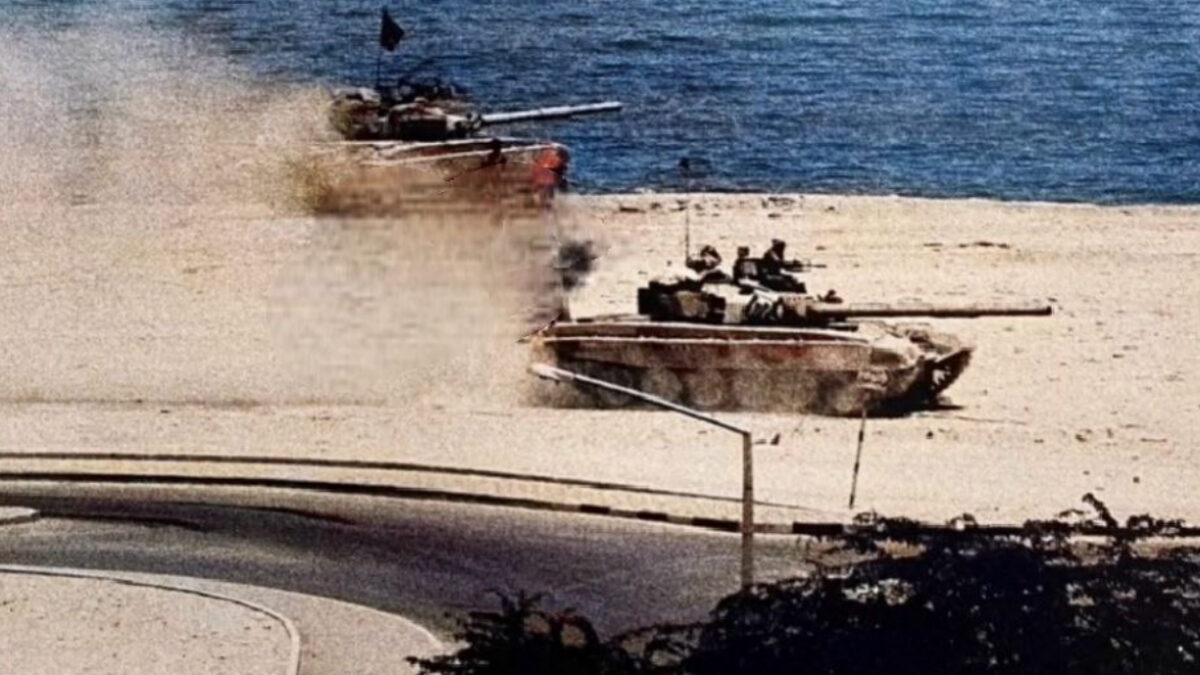
1990–1991: invasion and war
Iraq invaded Kuwait on 2 August 1990 and occupied the country. The UN Security Council responded that day with resolution 660, condemning the invasion and ordering Iraqi forces to withdraw immediately and unconditionally to their positions before the attack, according to the UN's historical account.
By 29 November, the Council had adopted 12 resolutions addressing Iraq and Kuwait. Resolution 678 authorized countries supporting Kuwait's government to use force if Iraq failed to comply by 15 January 1991. Air attacks began on 16 January, followed by a ground offensive on 24 February. By the suspension of offensive operations on 28 February, Iraqi forces had left Kuwait, the UN account says.
1991–2003: ceasefire and boundary monitoring
Resolution 687, adopted on 3 April 1991, set conditions for a formal ceasefire and created a demilitarized zone along the boundary. Iraq's acceptance made the ceasefire formal. Six days later, resolution 689 established the United Nations Iraq-Kuwait Observation Mission, known as UNIKOM, initially comprising 300 military observers.
UNIKOM monitored the zone and the Khawr 'Abd Allah waterway, also known as Khor Abdullah. The UN history records a newly demarcated boundary in early 1993 and the dissolution of the Iraq-Kuwait Boundary Demarcation Commission that May. Resolution 806 expanded UNIKOM's ability to intervene against limited boundary and demilitarized-zone violations.
The Council subsequently set 6 October 2003 as the endpoint for UNIKOM under resolution 1490. The demilitarized zone was also to end when the mission's mandate expired.
Missing people and property
A separate humanitarian effort seeks answers about missing Kuwaitis and nationals of other countries. UN representative Mari Yamashita reported an original caseload of 605 people: 290 cases had been clarified and 315 people remained missing, including 308 from Kuwait. She put the most recent identity confirmation in August 2023.
The International Committee of the Red Cross chairs the Tripartite Commission mechanism, with the UN participating as an observer. Yamashita said the ICRC had examined archives and assessed evidence concerning sites at Khamisiyah, Karbala, Samawa and Salman Pak. Securing fresh information and credible witnesses remained the main obstacle, she said, citing delayed access to potential witnesses from Iraq's former regime.
Property recovery has proceeded separately. Yamashita reported transfers to the Kuwait National Library in 2019 and Kuwait's Ministry of Information in 2022, followed by books and microfilm recordings in 2025. Important state records and archives were still missing, she said.
Khor Abdullah and maritime negotiations
The 2012 Khor Abdullah agreement concerns maritime navigation. According to the UN Secretary-General's November 2025 report, Iraq's Federal Supreme Court ruled in 2023 that ratification needed a two-thirds parliamentary majority, rather than the simple majority used in 2013. The GCC Ministerial Council rejected the ruling's reasoning and called for Iraqi adherence to the agreement.
Iraq's president and prime minister announced on 8 July 2025 that they were withdrawing lawsuits seeking to reverse that ruling. A presidential statement called for Parliament to complete the legislative process. As of November 2025, Parliament had not voted again on ratification, the Secretary-General reported.
Maritime delimitation beyond point 162 is a separate negotiating track from the navigation agreement. The joint technical and legal committee held its tenth session in Kuwait on 17 July 2025 and its eleventh in Baghdad on 16 September, according to the same UN report.
Sources
- United Nations — primary source: UNIKOM: United Nations Iraq-Kuwait Observation Mission - Background · S/2025/757 (PDF) · Remarks by Senior Representative for implementation of Security Council resolution 2792 (2025) to the Security Council [as delivered] | DPPA · accessed 2026-10-31