
Bahrain's Delmon civilization
What has happened since
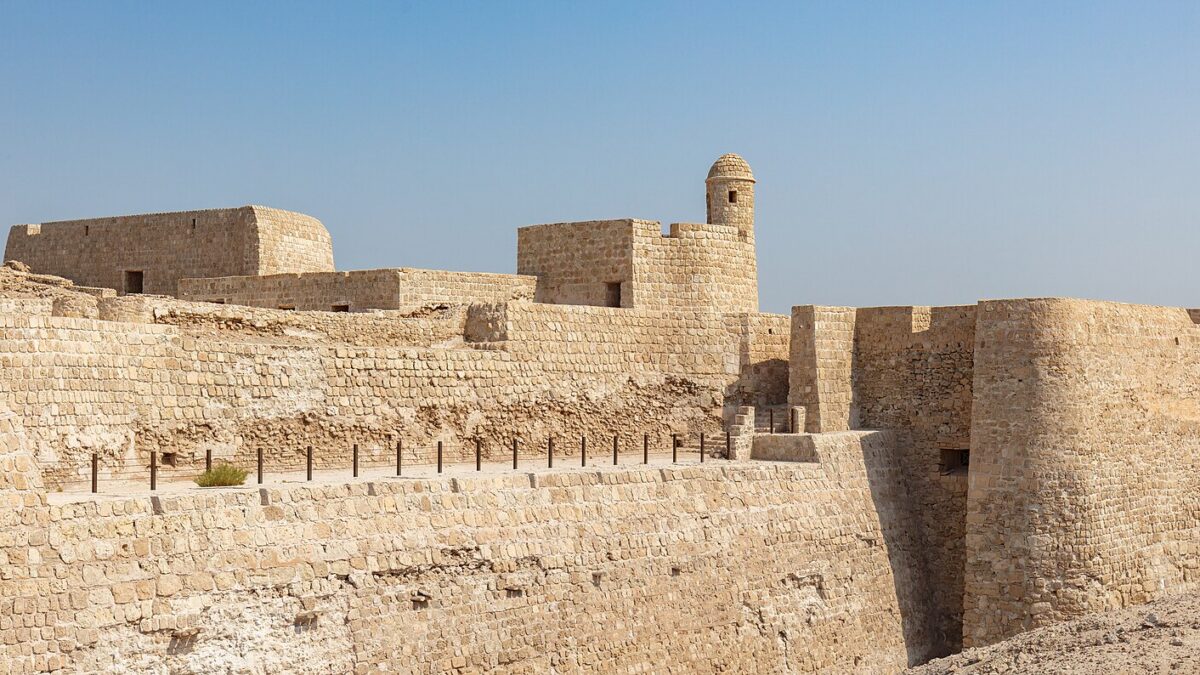
Qal’at al-Bahrain gained World Heritage status
UNESCO inscribed Qal’at al-Bahrain on its World Heritage List in 2005, recognising the site as Dilmun’s ancient capital and harbour. The protected area was extended in 2008 to include marine features and a visual corridor.[1]
Burial mounds were listed in 2019
The Dilmun Burial Mounds received World Heritage status on July 6, 2019. UNESCO’s listed property covers 21 components in western Bahrain: six cemetery fields containing approximately 11,774 mounds, and 15 other components containing 17 royal mounds at A’ali. These totals refer to the listed property, not all ancient graves in Bahrain.[2][3]
Protection and conservation
In its 2019 decision, the World Heritage Committee acknowledged damage from erosion and ancient looting but found that enough of the tombs’ structure and layout survived to establish their authenticity. It also recorded that every component had national-monument protection under Bahrain’s 1995 antiquities law, with planning restrictions governing development in surrounding buffer zones.[4]
A’ali West fieldwork began in 2025
The Aʿali West Archaeological Project carried out its first field season in 2025, according to a paper published on November 9, 2026, in Proceedings of the Seminar for Arabian Studies. Researchers described six substantial burial mounds enclosed by ring walls, smaller than the better-known royal mounds at A’ali.[5]
Researchers are testing the tombs’ significance
The A’ali West team proposed investigating whether these monuments represent an earlier phase of monumental burial or a socially distinct group. Neither explanation was presented as an established finding.[5]
A joint excavation was announced in November 2026
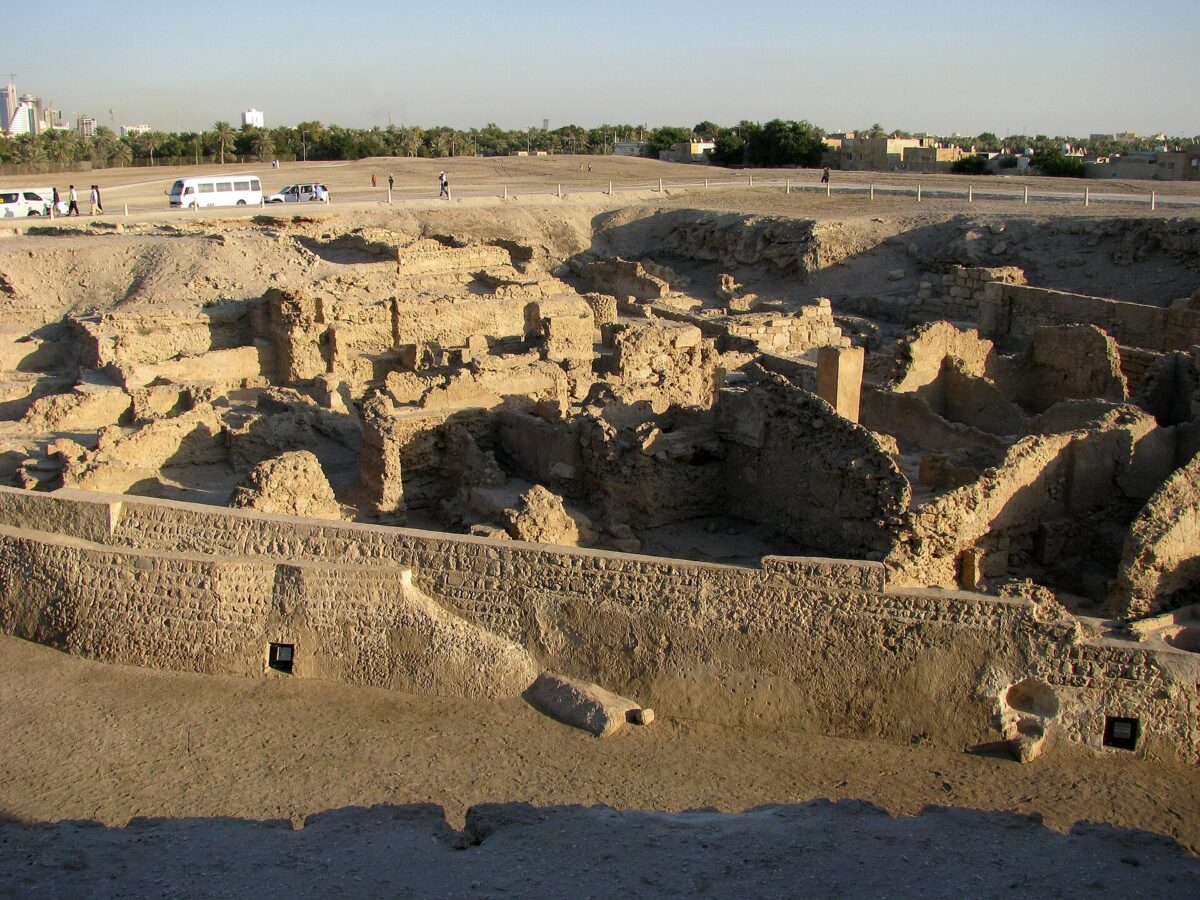
On November 16, 2026, Abu Dhabi Media Office announced The Magan–Dilmun Dialogues: Qal’at al-Bahrain Excavation, bringing together Zayed National Museum, Bahrain’s culture authority and Bahrain National Museum. The announcement said archaeologists and museum specialists from Bahrain and the UAE would begin six weeks of excavation during November.[6]
The latest programme targets Bronze Age connections
The programme announced on November 16, 2026, calls for excavation into deeper deposits, documentation and scientific analysis to investigate Bronze Age Dilmun’s links with Magan and regional trade networks. It also envisages a joint temporary exhibition at Zayed National Museum in Abu Dhabi and Bahrain National Museum in Manama, but gives no opening date.[6]
Why it still matters
UNESCO identifies Qal’at al-Bahrain as a trading centre linking Mesopotamia with the Indus Valley. Its archaeological deposits span approximately 2300 BCE to the sixteenth century CE, so the site’s history extends far beyond Early Dilmun.[1]
UNESCO dates the listed burial mounds to roughly 2200–1750 BCE. It describes their original form as low cylindrical towers, with royal tombs rising through two storeys. Differences between ordinary, chieftain and royal burials provide evidence, in UNESCO’s interpretation, of a society becoming more complex as Early Dilmun developed into an international trading centre.[3]
Timeline
- 2005 Qal’at al-Bahrain joined UNESCO’s World Heritage List.[1]
- 2008 Marine features and a visual corridor were added to the protected Qal’at al-Bahrain property.[1]
- 2019-07-06 UNESCO inscribed the Dilmun Burial Mounds.[2]
- 2025 The Aʿali West Archaeological Project conducted its first field season.[5]
- 2026-11-09 A research paper described the A’ali West project and questions surrounding six ring-walled burial mounds.[5]
- 2026-11-16 A joint Bahraini-UAE excavation programme at Qal’at al-Bahrain was announced, with fieldwork planned to begin during November.[6]
Sources
- Qal’at al-Bahrain – Ancient Harbour and Capital of Dilmun — UNESCO World Heritage Centre
- Seven cultural sites inscribed on UNESCO’s World Heritage List — UNESCO World Heritage Centre, 2019-07-06
- Dilmun Burial Mounds — UNESCO World Heritage Centre
- Decision 43 COM 8B.12: Dilmun Burial Mounds (Bahrain) — UNESCO World Heritage Committee, 2019
- The first season of the Aʿali West Archaeological Project in Bahrain — Archaeopress, Proceedings of the Seminar for Arabian Studies, 2026-11-09
- Zayed National Museum and Bahrain National Museum launch archaeological excavation project at Qal’at al-Bahrain — Abu Dhabi Media Office, 2026-11-16
The original report
ArabicNews.com, May 21, 1999
Archaeological excavations in Bahrain have started to unveil gradually the existence of an "unknown" civilization the island of Bahrain witnessed between 2500-1800 BC, which is actually the civilization of Delmon, the very historical name of Bahrain.
Chairman of the French expedition teams, Pierre Lumpar, said the people of Delmon used to build their tombs during their lifetime, adding that these tombs used to take the shapes of towers and the already discovered tombs in Bahrain are but the result of gradual collapse for these towers.
The French archaeologist added that excavation operations unearthed eight large cemeteries including between 170-200 tombs, a figure which amazed the European travellers in the 19th century who believed, at that time, that the island (Bahrain) was used as a collective grave since ancient times.
Lumpar, who is a researcher at the national center for scientific research in France, said, "If the people of Delmon were not digging tombs to bury their dead, this would had been eventually because the land is rocky."
He indicated that the civilization has a mode of writing, but so far no trace of such a writing has been unearthed. He continued that the French archaeological team found at al-Bahrain castle site, which was undoubtedly the ancient capital of the island at the peak of glory of the Delmon civilization, cuneiform tablets which date back to Delmon civilization, especially the Mesopotamia civilization which flourished between 1420- 1250 BC.
The civilization of Delmon has reached its peak around 2000 BC. It benefited then from the abundant water springs and its geographical location situated between India and the Mesopotamia in promoting copper, diamonds and timber trade.
But the collapse of the Indian civilization in the 8 centuries BC was eventually conducive to the collapse of Delmon civilization.
Royal tombs still exist in Ali province, extending under the current village which is built between the tombs. A British excavation team carried out drilling and digging works at Sa'ar site and the excavators could unveiled 70 houses.